




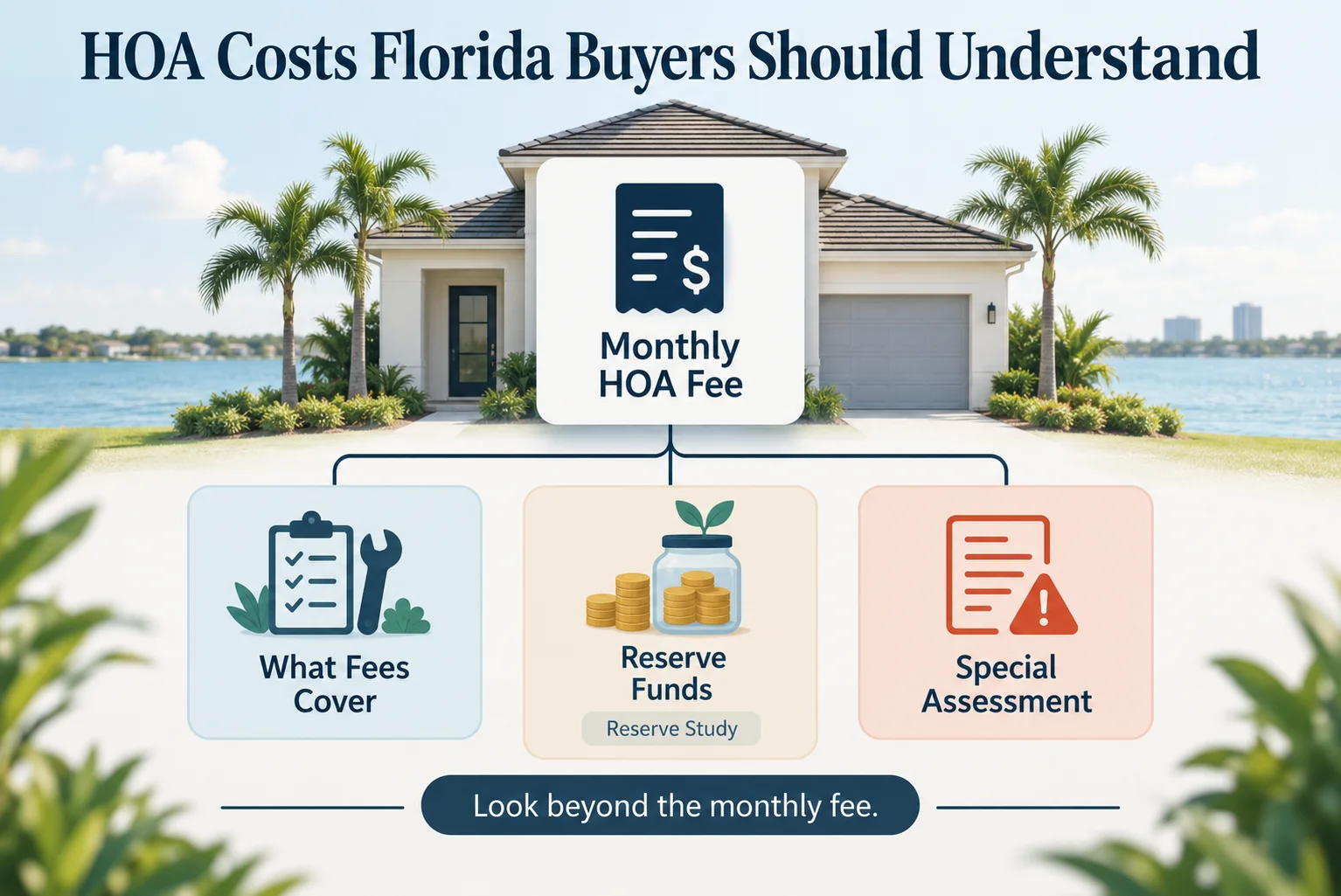
You may find a home that fits your budget, only to discover that the monthly HOA (Homeowners Association) payment is just one part of what you may have to pay. Before you buy, it helps to understand three things: regular HOA fees, reserve funds, and special assessments. Together, these can affect how much you actually pay to own the home, both now and in the future.
The monthly HOA fee is usually the easiest cost to spot, but it does not tell you the whole story. You also want to know what that fee covers, how much the HOA has saved for future expenses, and whether larger costs may be coming later. Understanding these details can help you avoid unexpected bills after you buy the home.
At The MMT Professional Group, we help clients better understand the responsibilities that come with owning property in a managed community. Our experience with property management gives us a practical view of how HOA budgets, maintenance needs, and day-to-day operations can affect owners.
What Do Your HOA Fees Actually Cover?
HOA fees are regular payments that help cover the community’s shared expenses. Depending on the HOA, that may include common-area maintenance, contracted services, and administrative costs.
Before you buy, find out exactly what your fee includes. Some communities may cover certain exterior maintenance or shared amenities, while others leave more responsibility to individual owners.
That difference matters because two properties with similar monthly HOA fees may not give you the same level of coverage.
Instead of asking only, “How much is the HOA fee?” ask:
- What does the HOA pay for?
- What am I responsible for separately?
- Are there any services or expenses not included in the regular fee?
Those answers can give you a much clearer idea of your actual monthly ownership costs.
Why Do HOA Reserve Funds Matter?
Reserve funds are money the HOA sets aside for larger future expenses.
Think about parts of the community that will eventually need major repair or replacement. An HOA may set money aside over time so it is better prepared when those expenses come due.
As a buyer, you should look at what the reserves are meant to cover, how much has already been saved, and whether large projects may be approaching.
The number in the reserve account is only part of the picture. A reserve balance may look healthy until you compare it with the cost of work that could be needed in the next few years.
At The MMT Professional Group, we work with owners and associations where budgeting, maintenance planning, and property operations need to stay organized. Our broader property management services are built around helping those responsibilities work together instead of being handled one issue at a time.
What Can a Reserve Study Tell You?
A reserve study can help you understand what major property expenses the HOA may need to prepare for in the coming years.
It may look at shared parts of the community, such as roofs, roads, elevators, or swimming pools, and estimate when they may need major repairs or replacement. It can also provide an estimate of how much that work could cost.
If the HOA has a reserve study, review it along with the amount currently saved in the reserve fund. The key question is not just, “How much money does the HOA have saved?” You also want to ask, “What is that money expected to pay for?”
For example, suppose a shared roof or another major feature may need replacement soon. You would want to know whether the HOA has enough money set aside for that work. If the reserve fund is not enough, homeowners could face higher HOA fees or an additional charge to help cover the cost.
This is why the reserve study and reserve fund should be looked at together. One shows what expenses may be coming, while the other shows how much money is currently available to help pay for them.
What Is a Special Assessment?
A special assessment is an additional amount homeowners may be required to pay on top of their regular HOA fees.
It may be used when the HOA has a large expense and the money already available is not enough to cover it. For example, a major repair or replacement project could create the need for additional funding. However, having low reserves does not automatically mean a special assessment will be charged.
Before buying, ask three simple questions:
- Are any special assessments already approved?
- Are any new assessments being discussed?
- Are there major projects planned in the near future?
These questions can help you spot possible costs that may not be included in the property’s regular monthly HOA payment. Knowing about them before you buy can make it easier to understand whether the property truly fits your budget.
Look at the Full HOA Picture Before You Buy
A low HOA fee is not automatically a bargain, and a higher fee does not automatically mean the community is poorly managed.
What matters is what the HOA covers, how it prepares for larger expenses, and what costs could still fall to you as an owner.
Before buying, review the budget, reserve information, and any notices about upcoming projects or assessments. You do not need to become an HOA expert. You simply need enough information to understand what you may be paying for after you move in.
At The MMT Professional Group, we provide real estate tips, property management advice, and investment insights to help you make more informed decisions. We can guide you from understanding how property managers may help control avoidable costs to recognizing the HOA expenses that should be considered before you buy.
If you are considering a property within an HOA, you can contact us so we can help you better understand the property management considerations before you move forward.


Leave a Reply