




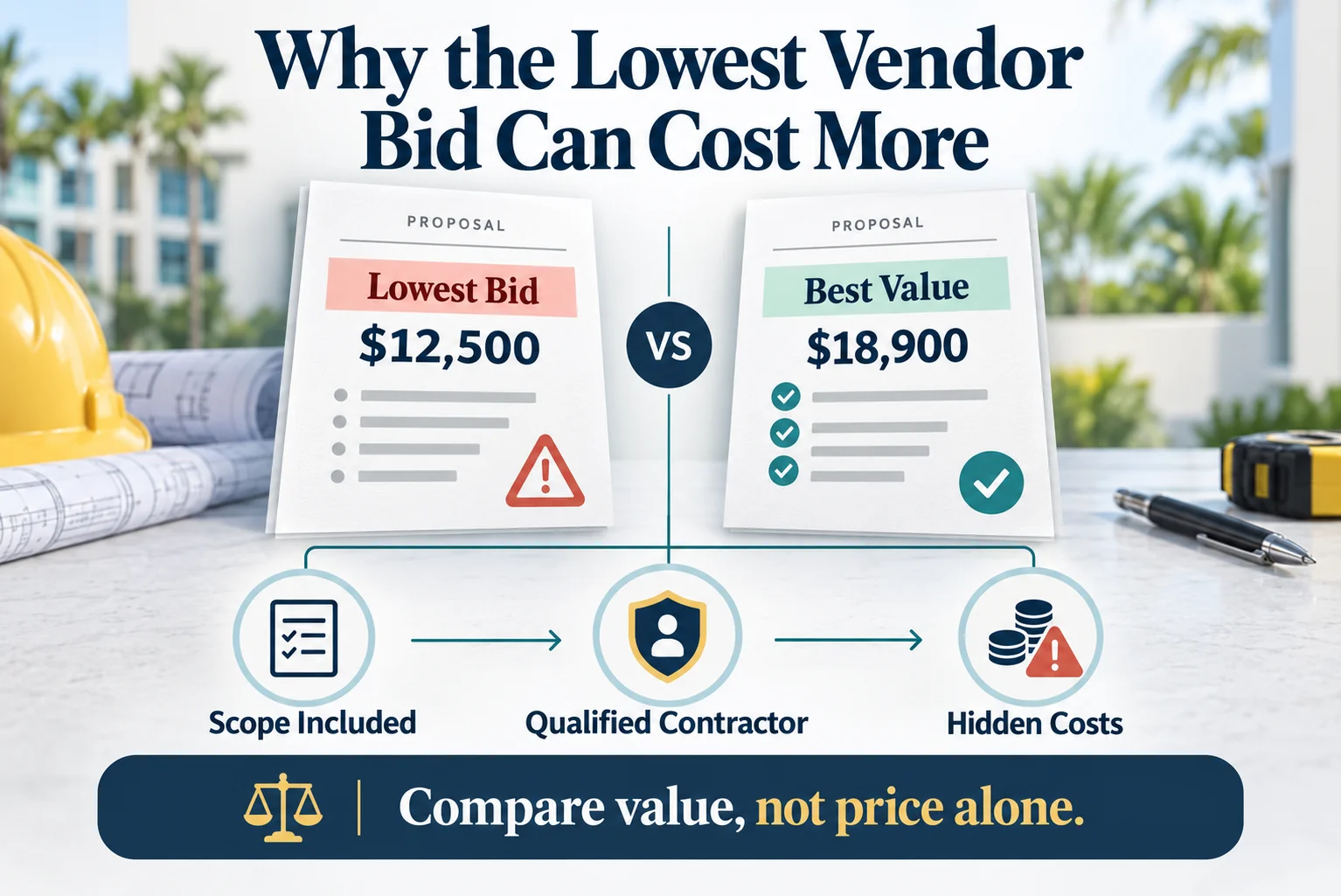
When a repair or property project needs to move forward, choosing the lowest bid can feel like the easiest way to protect your budget. But a lower price can cost more later if important work is left out, the contractor is not a good fit for the job, or delays create additional expenses.
The goal is not to choose the highest bid either. You want to compare what is included, who will complete the work, and what happens if the project does not go as planned. A clear proposal can make it much easier to understand what you are actually paying for.
At The MMT Professional Group, we know how difficult vendor decisions can become when several proposals look similar at first. We help property owners bring more structure to these decisions so costs, responsibilities, and expectations are easier to compare.
If you regularly coordinate repairs or contractors, you can explore our property management approach to see how vendor oversight fits into ongoing property operations.
Compare What Each Bid Actually Includes
A low bid only makes sense when you know what is included in the price.
This is where the scope of work matters. Put simply, the scope of work is the written description of what the contractor agrees to do. It should help you understand the work being performed, the materials being used, and anything that is not included.
Imagine two contractors bidding on the same exterior painting project. One proposal includes surface preparation, minor repairs, and cleanup. The other gives you a lower price but does not include those items.
At first glance, the second bid may look like the better deal. Once additional work is added later, the final cost may look very different.
Before comparing totals, ask three basic questions:
- What work is included?
- What materials are included?
- What is specifically excluded?
If the answers are unclear, ask for more detail before making a decision.
Look at Who Is Behind the Bid
The price tells you what a contractor wants to charge. It does not tell you whether the contractor is the right choice for the project.
Start by looking at three areas: experience with similar work, appropriate licensing and insurance where required, and recent references or examples of comparable projects.
Experience matters because different properties and projects come with different challenges. A contractor who has completed similar work may be better prepared to anticipate what the job involves.
You should also understand any warranty that comes with the work and the proposed timeline. A short completion date may sound attractive, but it only helps if the schedule is realistic.
The same applies to a warranty. Ask what it covers, how long it lasts, and what you would need to do if a problem appears after the project is finished.
Watch for Costs That May Appear Later
A low starting price can become more expensive when the original proposal does not cover the full job.
Extra costs often show up in three ways. Additional work may be needed because something was excluded from the proposal. Work may need to be corrected if it was not completed properly. Delays may also affect other contractors, tenants, or normal property operations.
None of these problems automatically happens because a contractor submitted the lowest bid. A higher bid is not automatically safer either.
The point is to understand the risks before you sign an agreement.
For example, if one contractor charges more because the proposal includes preparation work that another contractor left out, the higher price may actually give you a more complete picture of the project.
That is why comparing bids line by line can be more useful than simply looking at the number at the bottom of the page.
Ask the Same Questions Before You Choose
When every contractor is asked different questions, comparing proposals becomes harder.
Keep the process consistent by starting with three questions:
- Exactly what is included in this price?
- What happens if additional work is discovered?
- What warranty and completion timeline are included?
Once those basics are clear, you can ask about insurance, references, and similar projects the contractor has completed.
You should also get important details in writing. If something matters to your decision, such as a specific material, completion date, or responsibility, it should not depend only on a verbal conversation.
Clear expectations can reduce confusion once the work begins.
Property Management Can Make Vendor Decisions Easier
Choosing contractors can become time-consuming when you are already dealing with maintenance requests, budgets, and daily property responsibilities.
A property manager can help organize proposals, coordinate communication, and follow the progress of approved work. This does not mean the manager should automatically make every decision for you. The value comes from having someone help keep the process organized so you have better information when a decision needs to be made.
At The MMT Professional Group, we also provide practical insights that help you make informed decisions about maintaining and managing your property. From understanding how property managers can help you control avoidable costs to evaluating vendor proposals more carefully, the focus is on helping you see where better oversight can protect your time and budget.
Choose Value, Not Just the Lowest Number
The best bid is not automatically the cheapest or the most expensive. It is the proposal that gives you a clear understanding of the work, the contractor, and the responsibilities attached to the price.
Taking a little more time before choosing a vendor can help you spot missing work, ask better questions, and reduce surprises after the project starts.
For property owners and associations, that can make vendor decisions easier to manage and give you a clearer picture of where your money is going.
If managing vendors and property projects is taking more time or coordination than expected, you can schedule an appointment so we can talk through the support your property may need.


Leave a Reply